
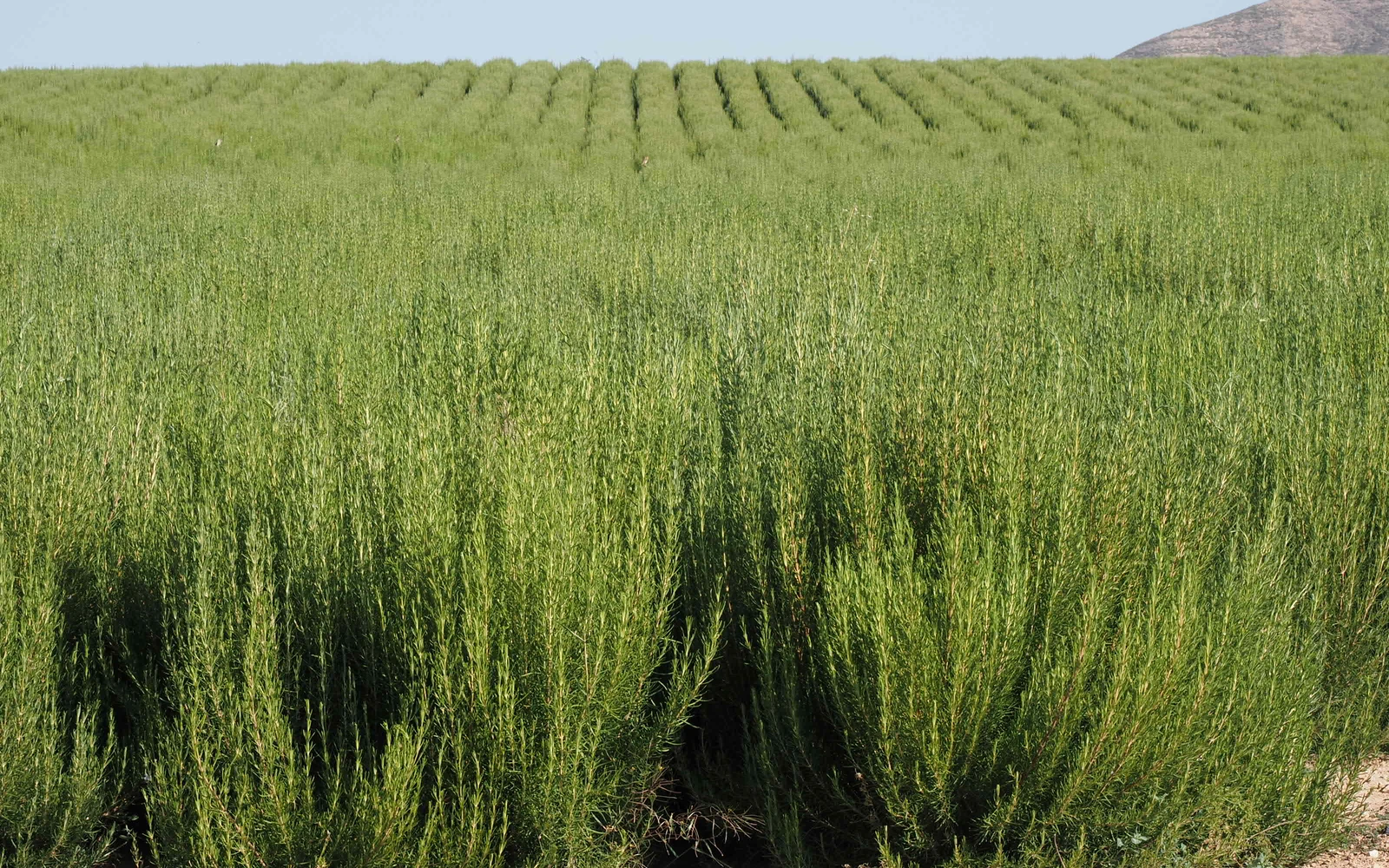
Rosemary Cineol

Rosmarinus officinalis L., Lamiaceae

CAS: 8000-25-7 / 84604-14-8

EINECS/ELINS: 283-291-9

FEMA: 2992

INCI: Rosmarinus Officinalis Leaf Oil

Organoleptic Information
Appearance Transparent liquid, colourless to pale yellow.
Smell Characteristic, wild, cineolic, more or less camphoraceous.
Physical and Chemical Properties
Density 0.907 – 0.920
Refraction 1.464 – 1.470
Rotation (-2º / +5º)
Flash point 43 º C
Chemical Composition %
Alpha-Pinene 9 - 14
Camphene 2.5 - 6
Beta-Pinene 4 - 9
Beta-Myrcene 1 - 2
Limonene 1.5 - 4.0
1,8-Cineole 38 - 55
Para-Cymene 0.5 - 2.5
Camphor 5 - 15
Linalool 0.3 - 2
Bornyl Acetate 0.1 - 1.6
Alpha-Terpineol 1 - 2.5
Borneol 1 - 5
Verbenone n.d. - 0.4
Additional Information
Origin 100% pure & natural.
Service life 4 years.
Conservation Store in tightly filled, closed containers in a cool, dry, well-ventilated place, protected from light.
Uses Industrial: Under professional supervision. Not intended for retail sale.
Use in perfumery, cosmetics, personal hygiene, detergency, pharmacy and * human nutrition (flavouring preparation).
(*) On request.
Containers Metal drums: 50 - 100 - 200 kg.
Plastic jerrycans: 5 - 10 - 20 - 25 kg.
PET bottles: 0.250 - 0.500 - 1.00 kg.
Notes

Description

The essential oil of romero cineol is obtained by steam distillation. It stands out for its anti-inflammatory, antinociceptive, antiviral, mucolytic and expectorant biological activities. It is used in perfumery, cosmetics, aromatherapy and hygiene and wellness products.