
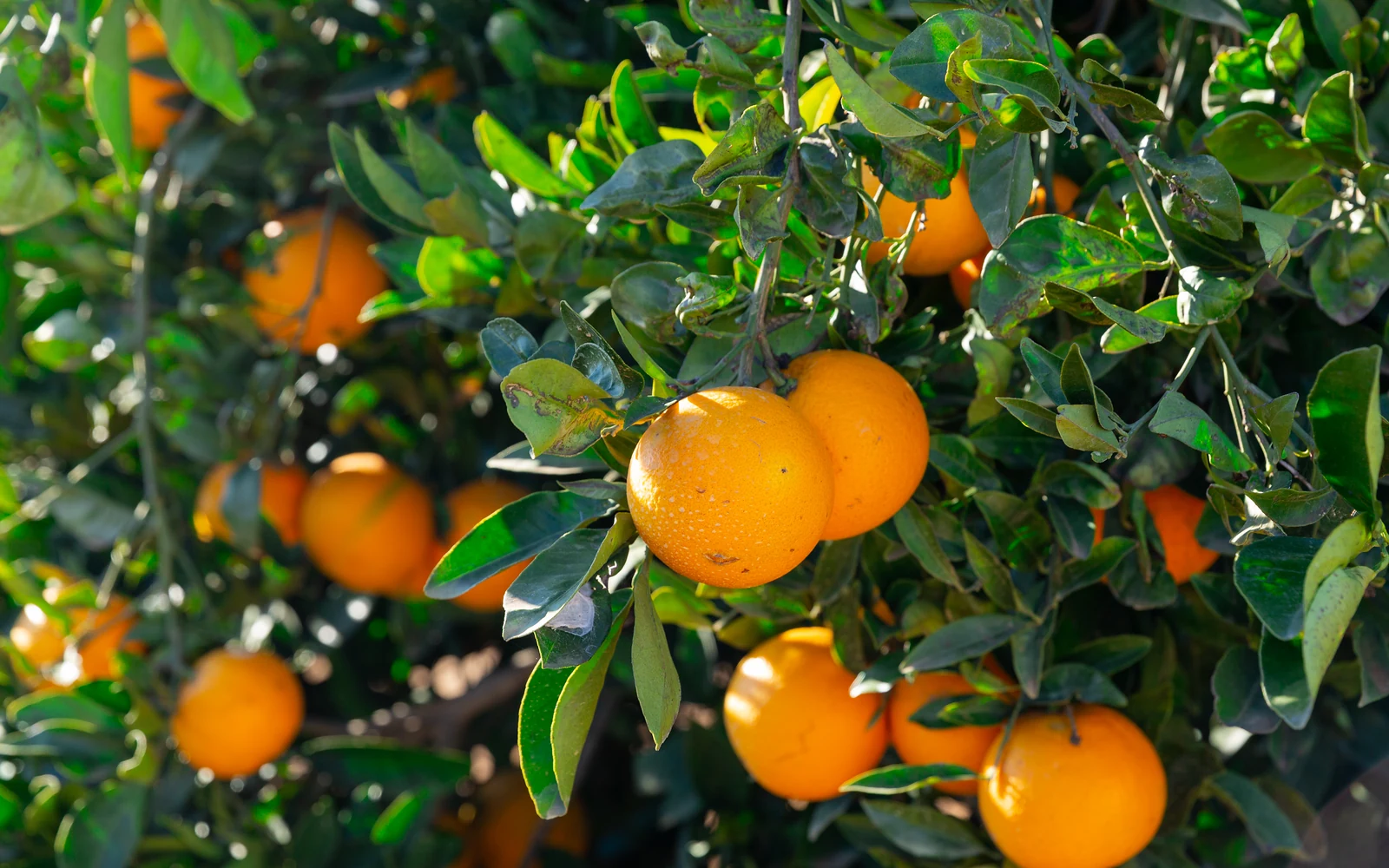
Orange

Citrus sinensis (syn: Citrus aurantium dulcis), Rutaceae

CAS: 8008-57-9 / 8028-48-6 / 97766-30-8

EINECS/ELINS: 232-433-8 / 307-891-8

FEMA: 2824

INCI: Citrus Sinensis peel Oil Expressed

Organoleptic Information
Appearance Transparent liquid, yellow to dark orange.
Smell Characteristic, citrusy, fresh, intense.
Physical and Chemical Properties
Density 0.830 – 0.848
Refraction 1.470 – 1.477
Rotation (+94º / +99.5º)
Flash point 45º C
Chemical Composition %
Alpha-Pinene 0.4-0.8
Beta-Pinene 0.02-0.15
Sabinene 0.2-0.8
Beta-Myrcene 1.5-3.5
Limonene 93-96
Octanal 0.1-0.4
Nonanal 0.01-0.01
Decanal 0.1-0.7
Linalool 0.15-0.7
Neral 0.03-0.1
Valencene 0.01-0.4
Geranial 0.05-0.2
Beta-Sinensal 0.01-0.06
Additional Information
Origin 100% pure & natural.
Service life 2 years.
Conservation Store in tightly filled, closed containers in a cool, dry, well-ventilated place, protected from light.
Refrigeration preserves it better.
Uses Industrial: Under professional supervision. Not intended for retail sale.
Use in perfumery, cosmetics, personal hygiene, detergency, pharmacy and * human nutrition (flavouring preparation).
(*) On request.
Containers Metal drums: 50 - 100 - 200 kg.
Plastic jerrycans: 5 - 10 - 20 - 25 kg.
PET bottles: 0.250 - 0.500 - 1.00 kg.
Notes

Description

The essential oil of sweet orange is obtained by cold pressing the pericarp of Citrus sinensis. It mainly comes from Spain, Italy and the United States. It has an aldehydic, citrusy, fresh and orange-like aroma.

It stands out for its antifungal, antitumor, cytotoxic, antiseptic and insect-repellent biological activities.

It is used in perfumery, cosmetics, aromatherapy, and hygiene and wellness products.